Flapper Jewellery
It's always exciting when a new box of colourful gemstone beads arrives at my front door.
Sifting through a recent haul of these beauties, I decided I wanted to do more with them than bead bracelets.
As I let my mind drift to consider ideas, I came to a joyful vision of a woman dancing and wearing lashings of long pearls and beads. Yes of course - the roaring 1920's and the Flapper style!
I confess I was very excited about exploring woman's lives in this era of time and what they wore.
Why the word Flapper?
The etymology of the word flapper has shifted through time until the 1920's where it was fixed and interestingly, has stayed.
It began in the 1630's where the word Flap was slang for a young prostitute. Move forward a couple of hundred + years and the word flap had morphed into flapper and it was still being used to describe a prostitute but it was also moving into a more relaxed and less derogatory term used to describe a lively young girl.
By the early 1920's news papers and magazine articles started to pick up on the word and use it more frequently to describe woman who enjoyed independence, loved to dance, drink, party and engage in loose romantic liaisons. Finally a silent movie was released in 1920 called The Flapper and it highlighted a new cultural phenomenon for woman, which was already well under way.
Flapper style
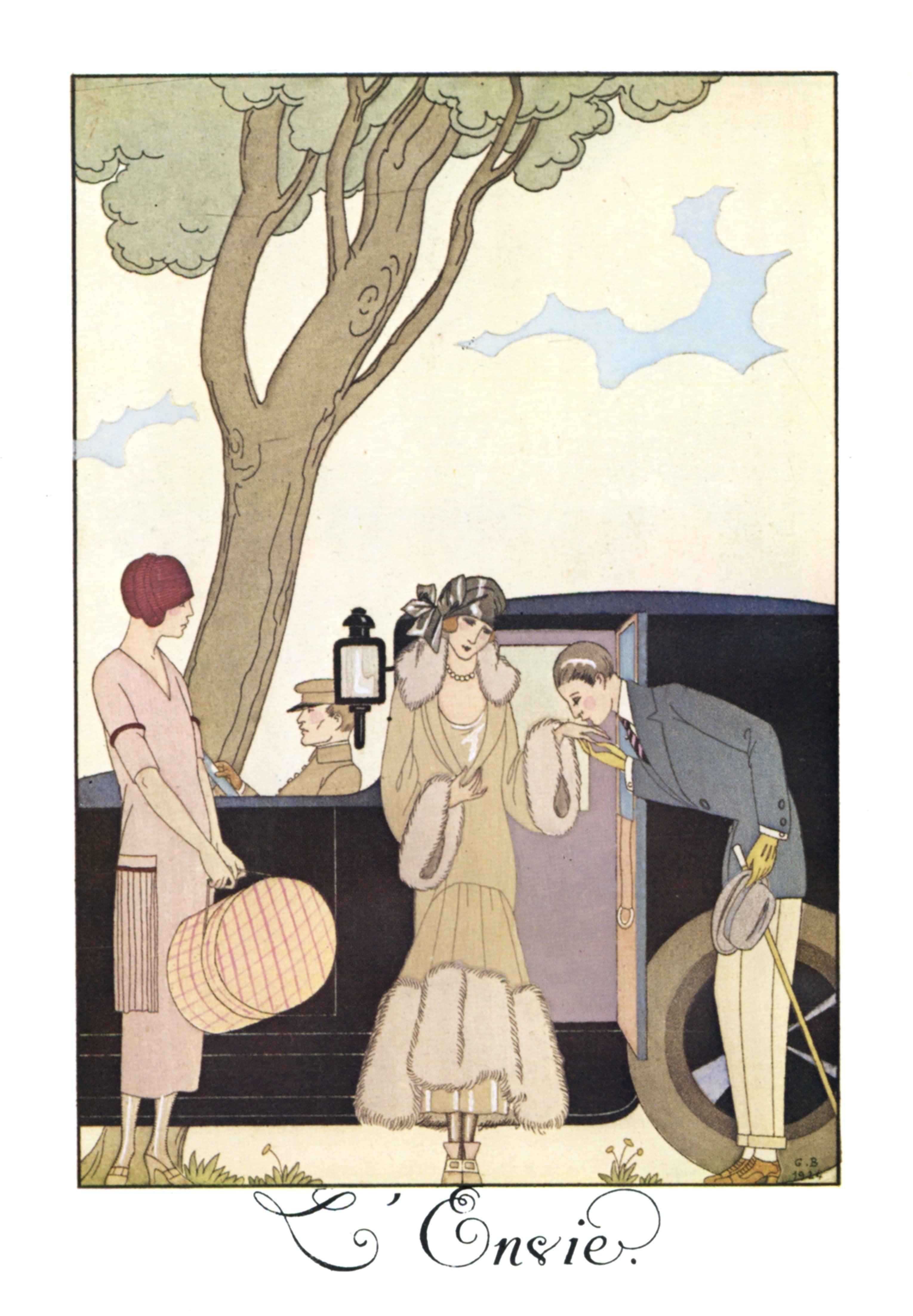
Flapper style was about creating a sense of elongation with a slightly boyish look.
Women cut their hair to a short bob style - which was either worn just above or below the jaw line. If a hat was worn, it was close fitting and called a cloche or bell hat.
Dresses were loose fitting with a drop waist or no waist line. A skirt was worn the same style with a top finishing below the waist.
Initially the length of a women's dress finished just above the ankles, but as the years progressed it climbed further upward, to finishing just below the knee.
Painting by George Barbier
Flapper Necklaces
What outfit is complete without a necklace or two, or any jewellery for that mater!
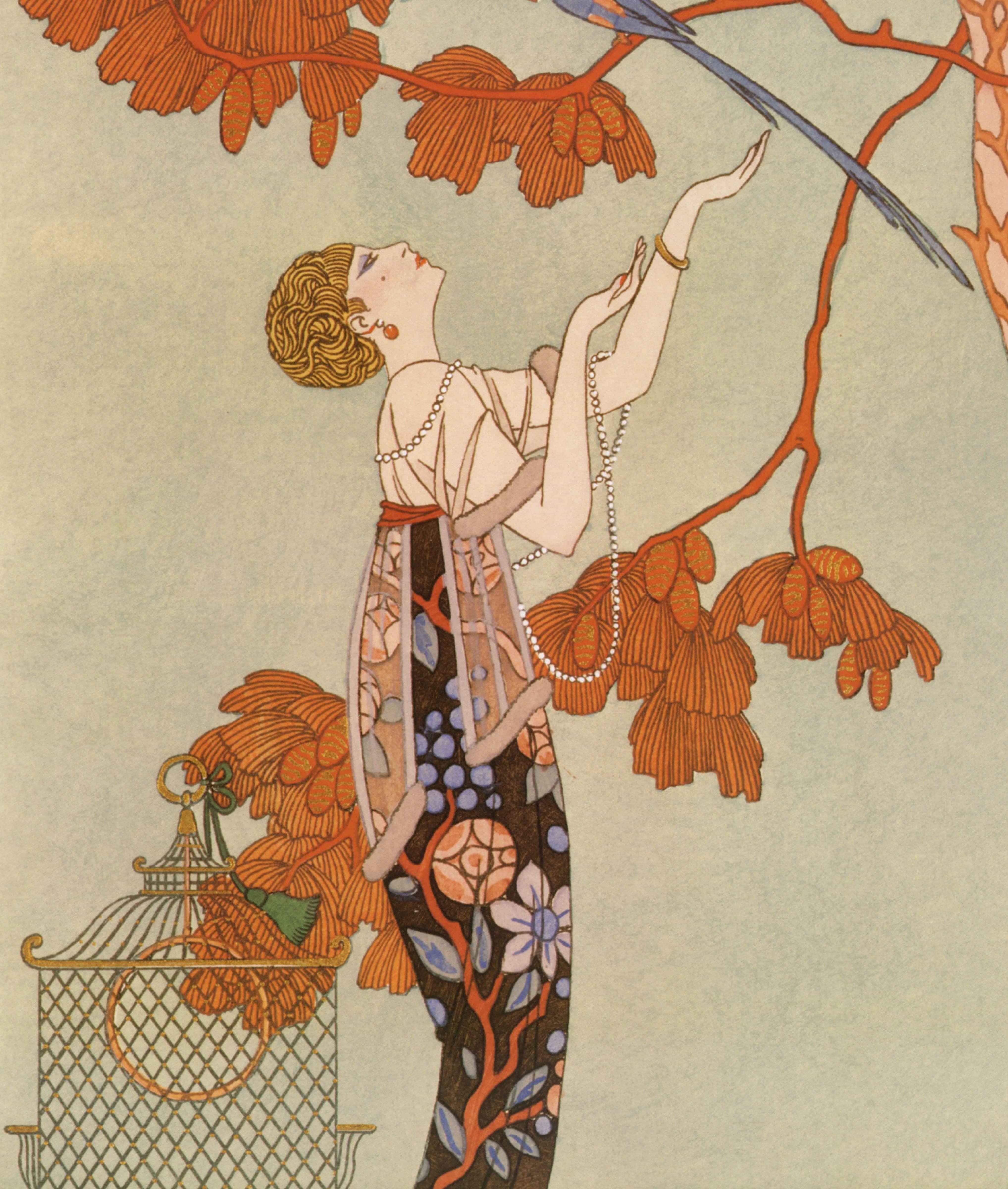
Pearls were a very popular complement to a woman's outfit and the longer the better.
Unless you were very wealthy and could afford a strand of natural pearls, most woman's pearls would have been faux. Faux pearls of the time were hollow glass beads filled with wax and covered in a paste called guanine. This paste was a mixture that incorporated fish scales.
Painting by George Barbier
Pearls
Cultured pearls were not available for purchase in the early1920's.
At that point in time Mikimoto was in the process of obtaining offical, international recognition for his cultured sea pearls and freshwater pearls were a long way off being ready.
There is a great variety of pearls available for purchase today, thus lessening the need to wear faux pearls, which of course are generally plastic.
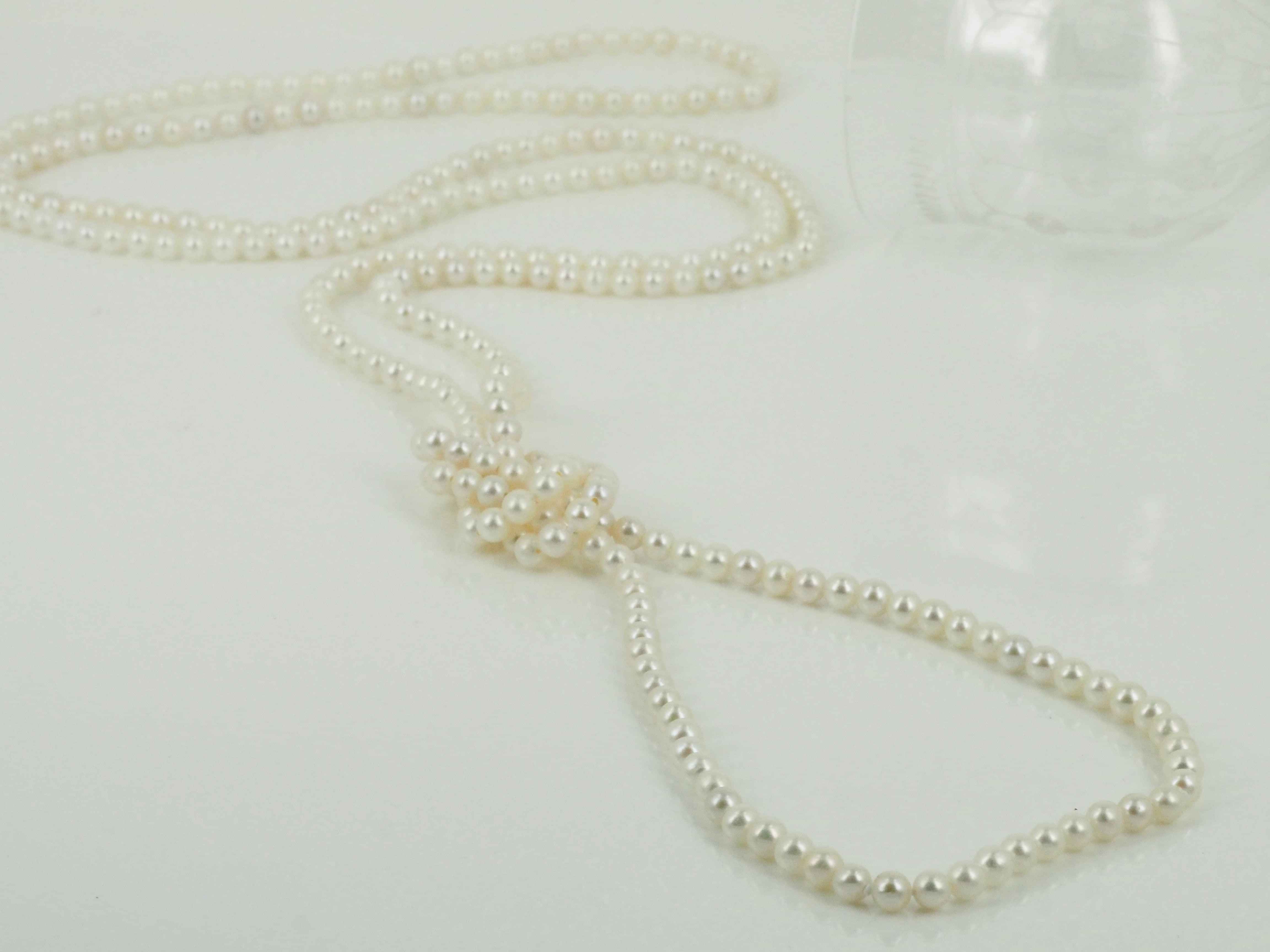
Freshwater pearls, as pictured below, are a great option for a long strand of moderately priced pearls.
1920's Reimagined
And now I would like to share with you my interpretation of the 1920's Flapper Jewellery.
Let us start with styles of long necklaces.
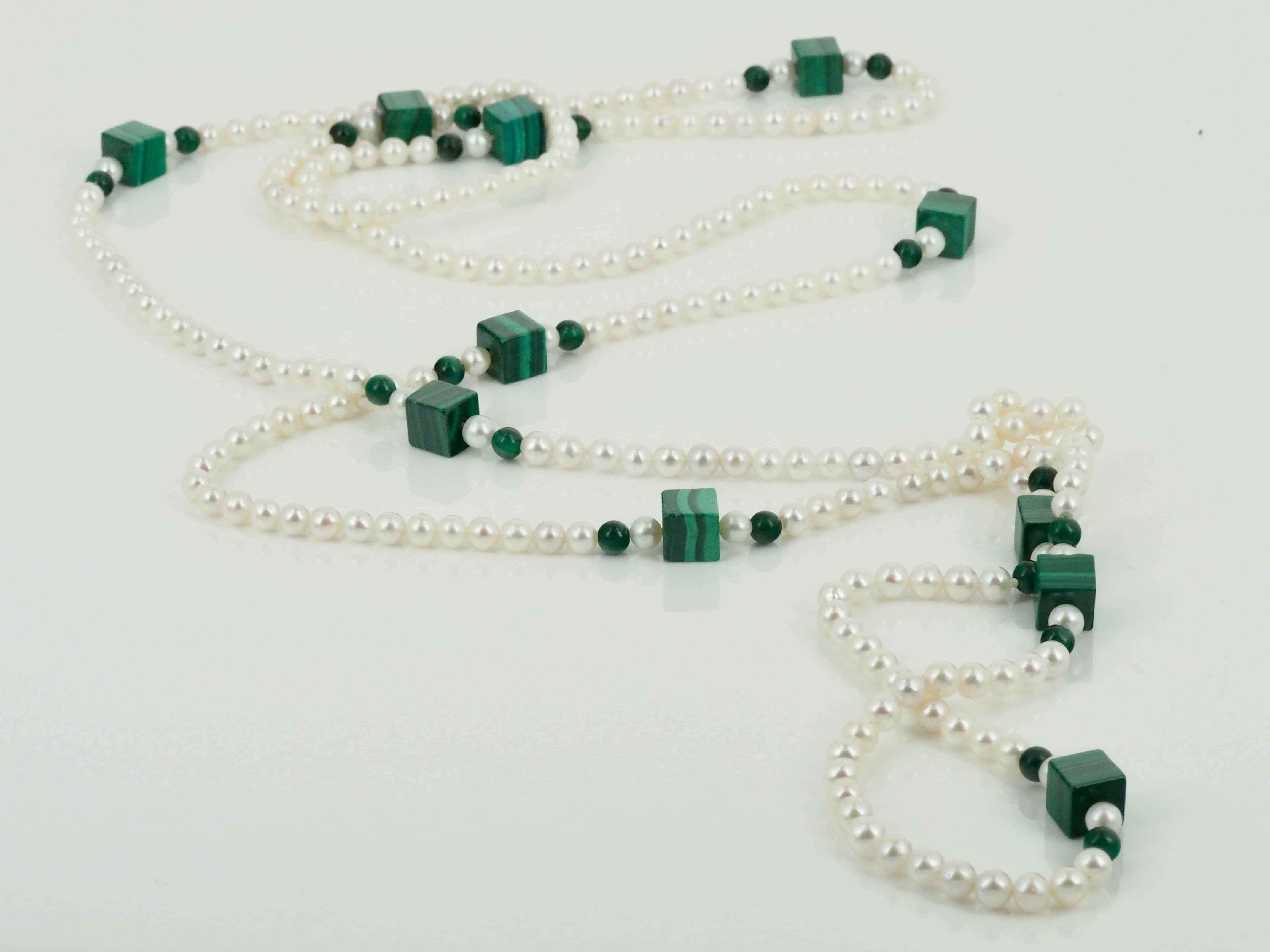
Some were plain as pictured above and some were interspaced with something of interest - such as a larger or different shaped bead or decorative pieces of metal. This style of necklace is called a station necklace.
The next four photos are station necklaces. The first one is freshwater pearls with very fine malachite.
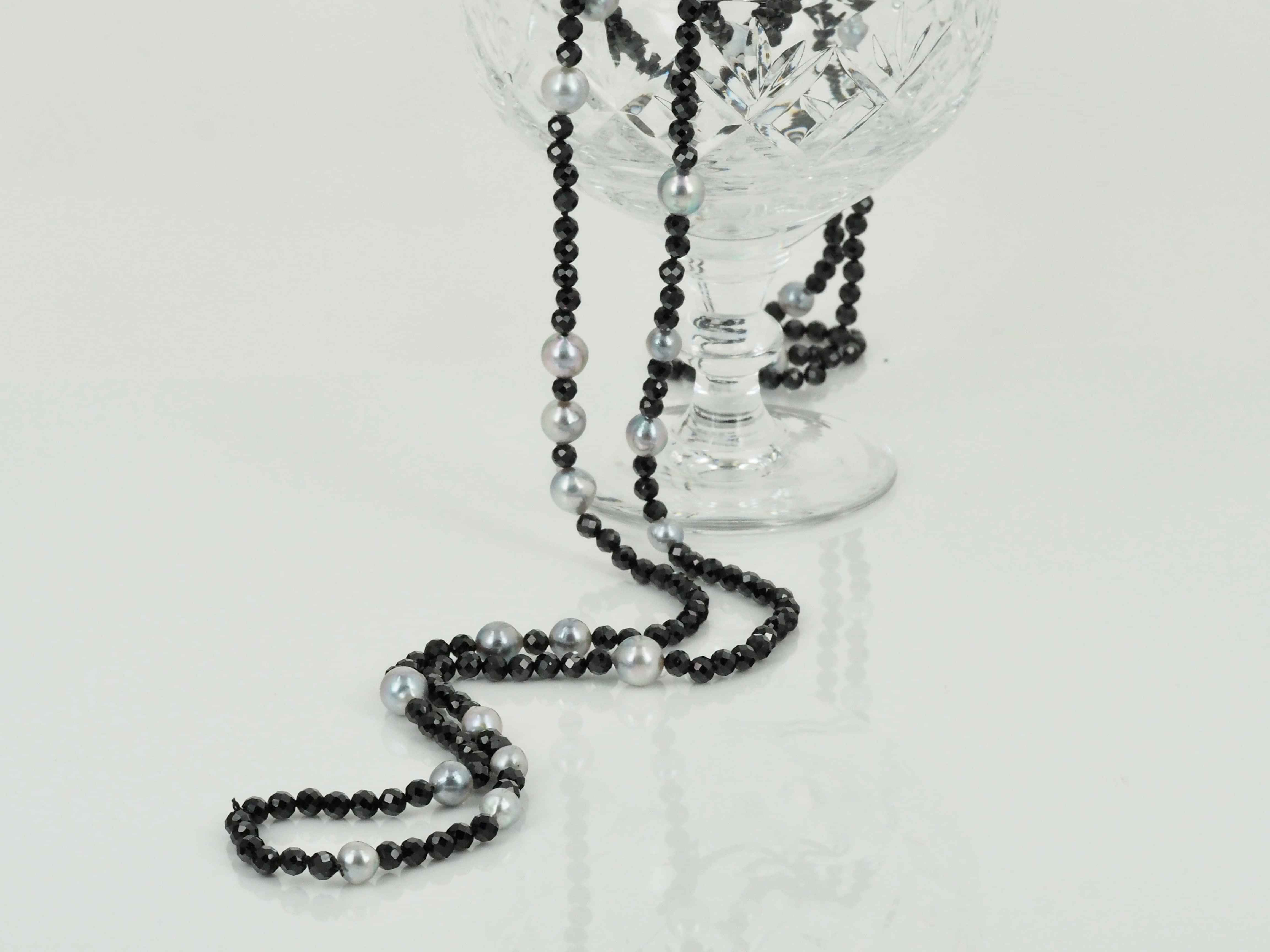
Black Spinels and Silver Akoya Pearls
No other black stone sparkles quite like black spinels - and surprisingly, they looks fantastic over a black dress.
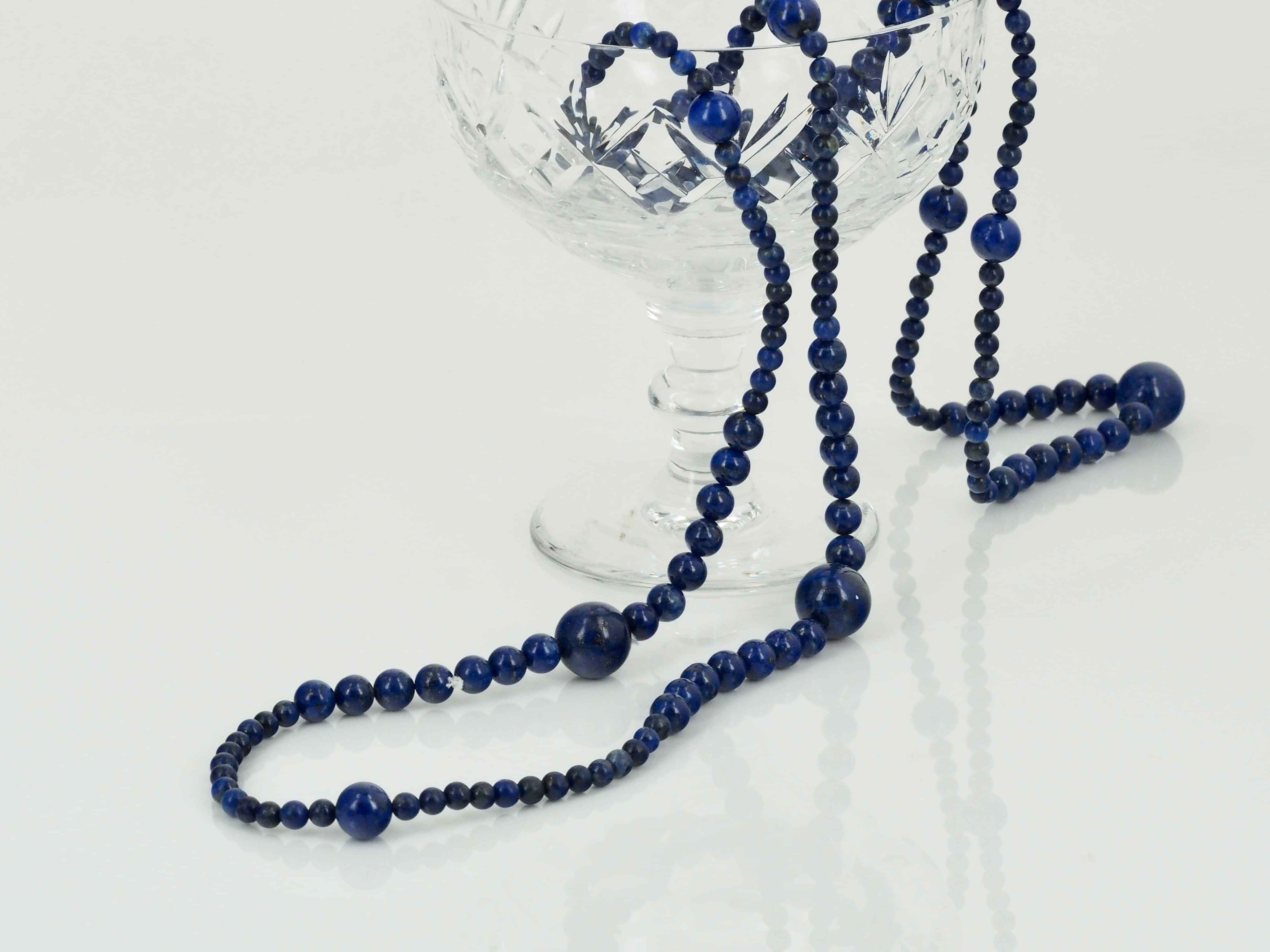
Lapis Lazuli
A long strand of beautiful blue, lapis lazuli.
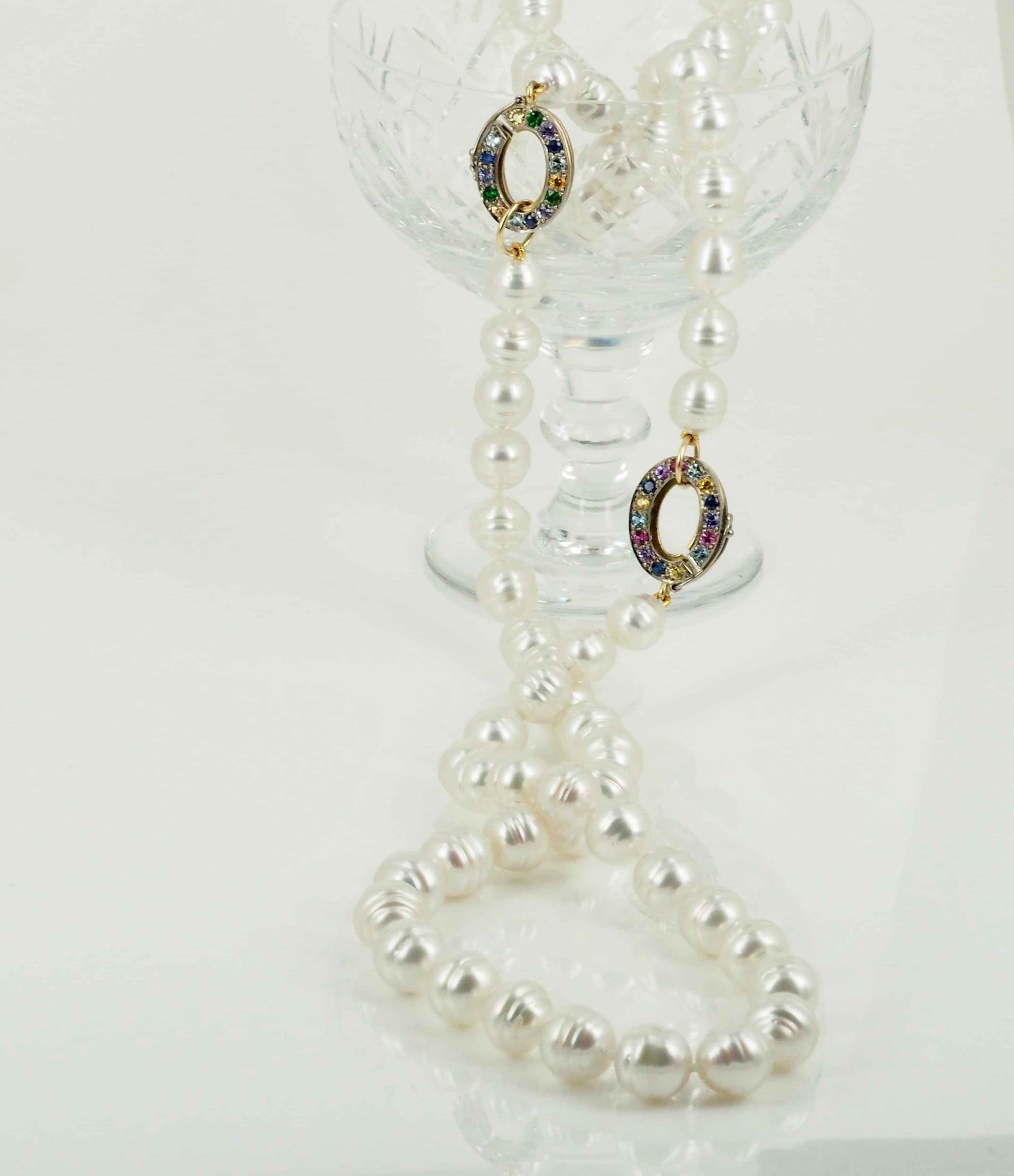
A Rope Of South Sea Pearls
I made this stunning necklace prior to my recent 1920's inspiration, but it still fits the theme well. This necklace is three pieces for the price of one.
It is made up of two separate necklaces which can be linked together as pictured below or worn individually or worn doubled. A very valuable item to add to any jewellery wardrobe.
(Price on application as it needs to be re-valued.)
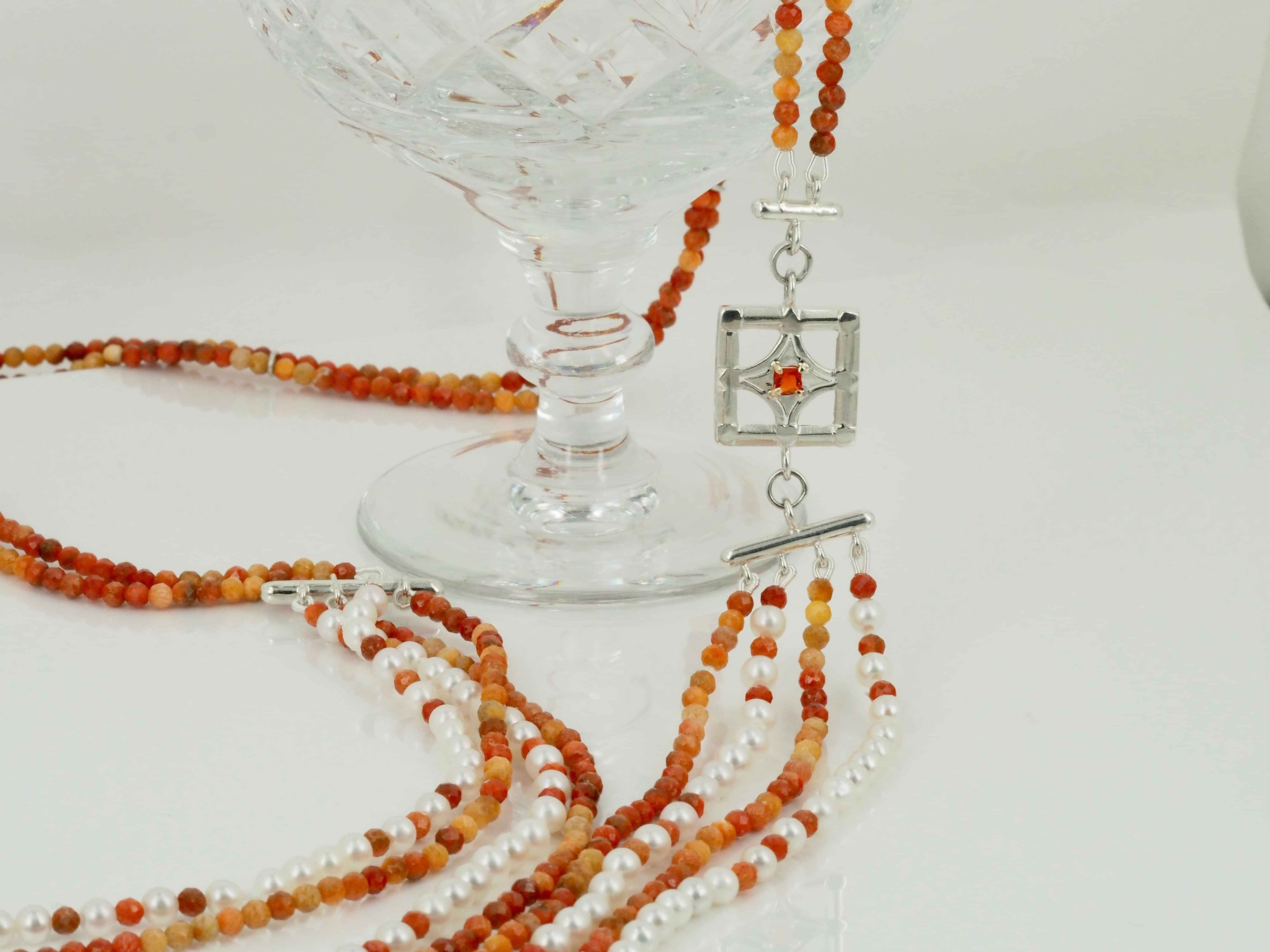
Coral and Freshwater Pearls
The next three photos are called bib necklaces , which was also a popular necklace style in the 1920's. It consisted of a couple, to several layers of pearls and beads hanging from two joining points.
This is fossilised coral and freshwater pearls with a small bright Mexican Fire opal.
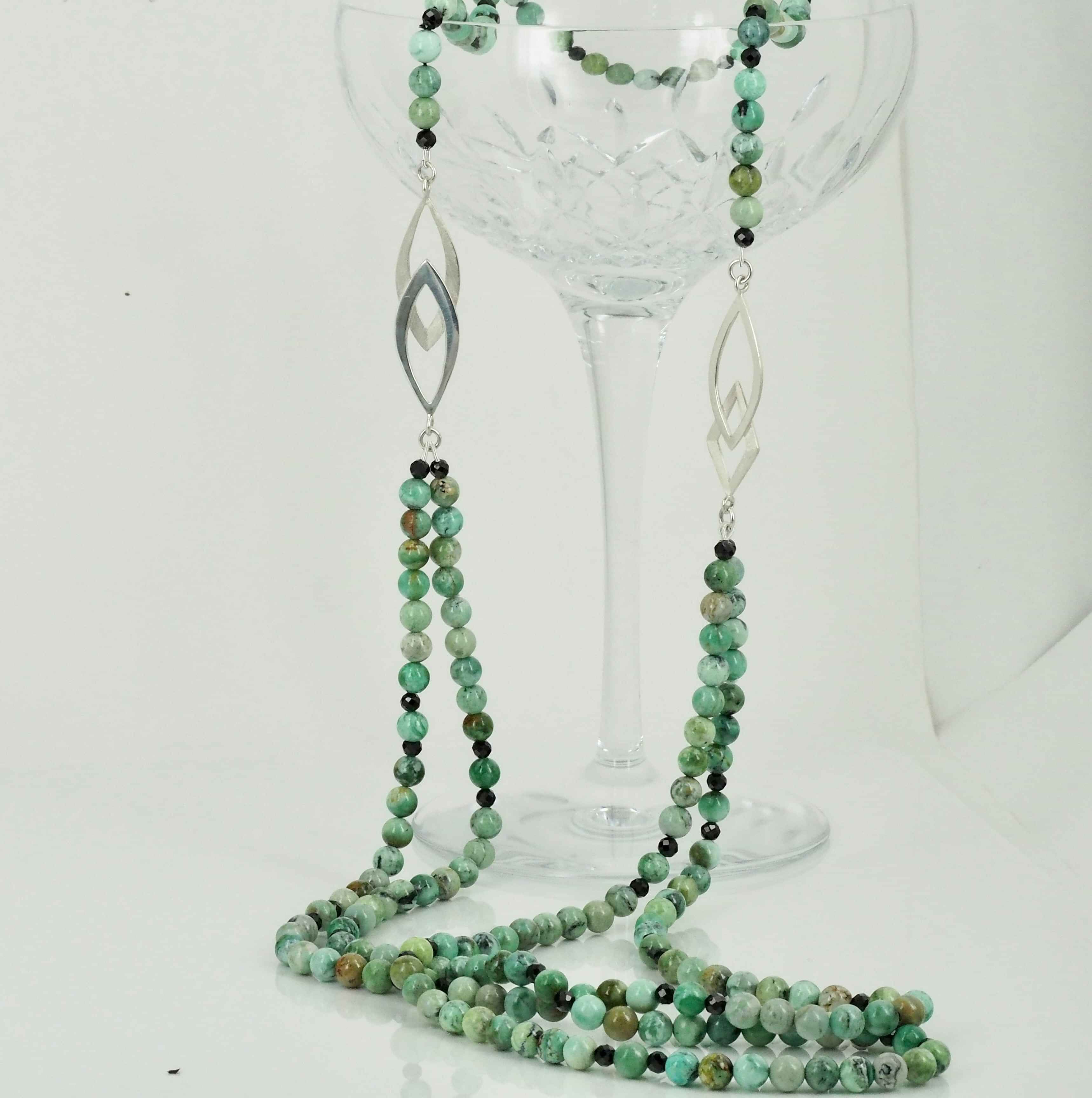
Vibrant Variscite and Black Spinels
This is a very interesting stone and a lot of it comes from Australia. This necklace is a double layer of bright green variscite beads topped with sterling silver marquise shapes.
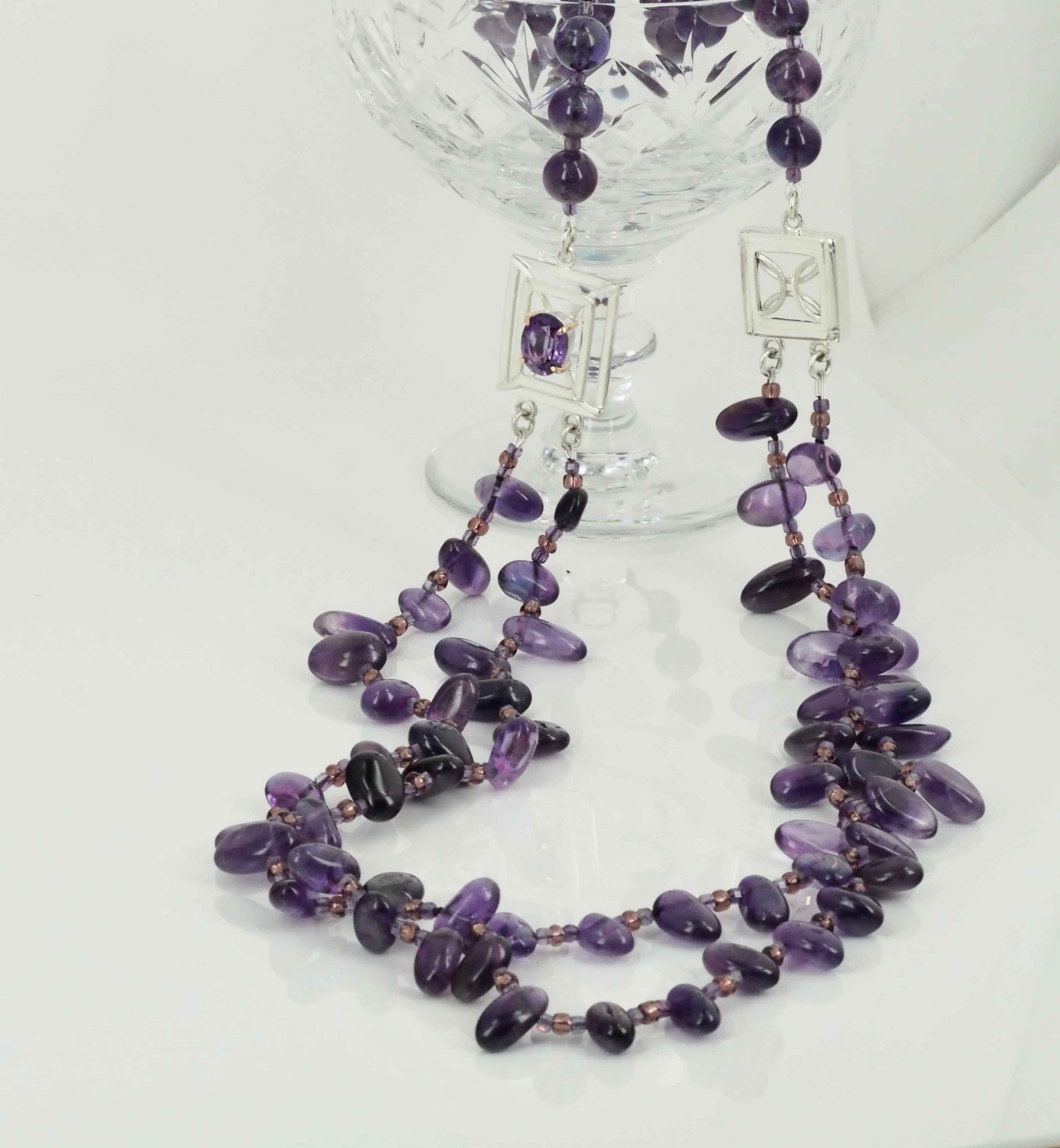
Amethyst
Delicious looking amethyst pebbles.
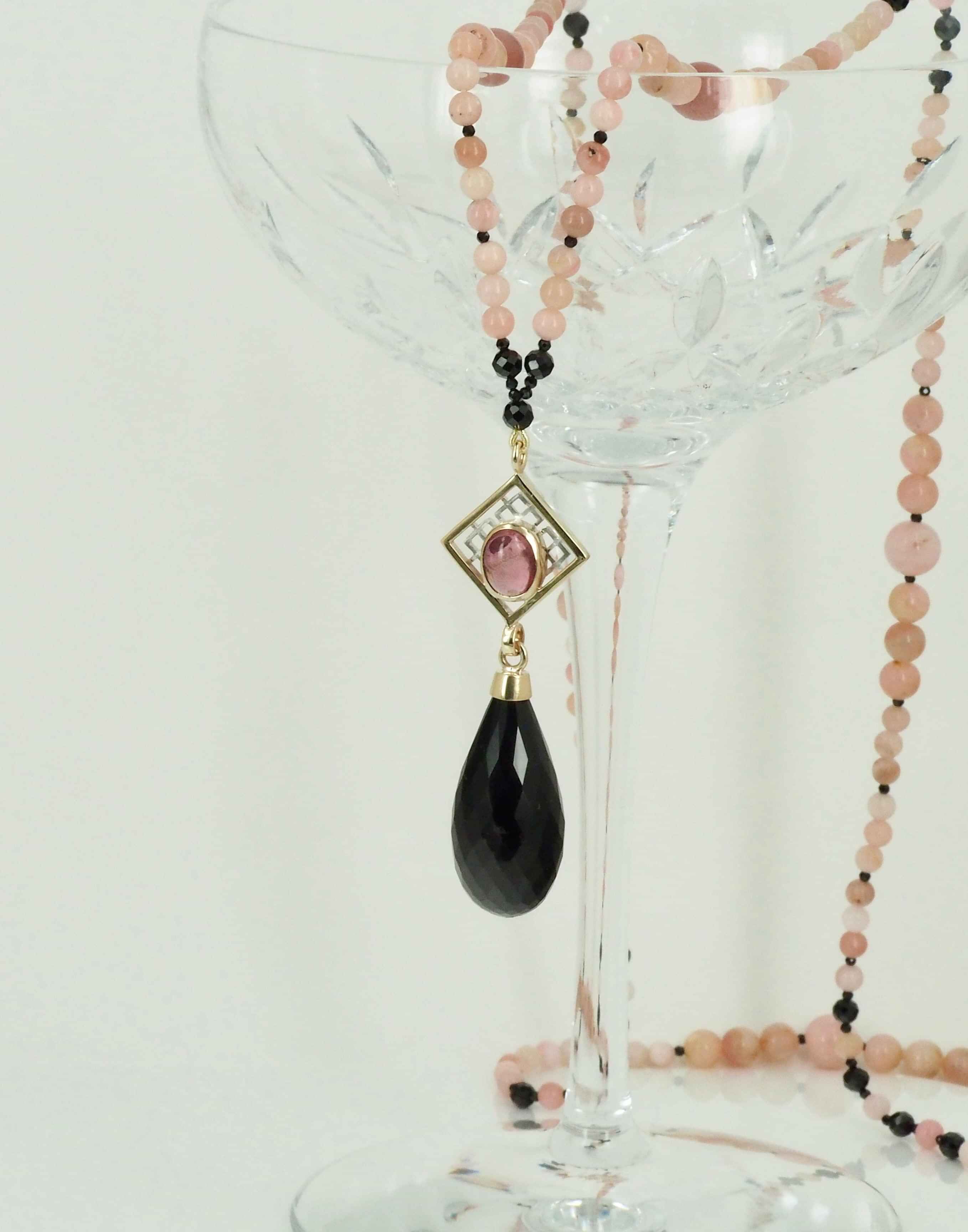
Long Necklace with Pink Opals
A third notable flapper necklace style was called a sautoir - it was a long necklace that terminated at a central point. The central focus could be a beautiful stone in a setting, as seen in the next three photos below, and it may also have included a tassel of pearls or beads.
Pink opals, black spinels, pink tourmaline and a briolette cut onyx.
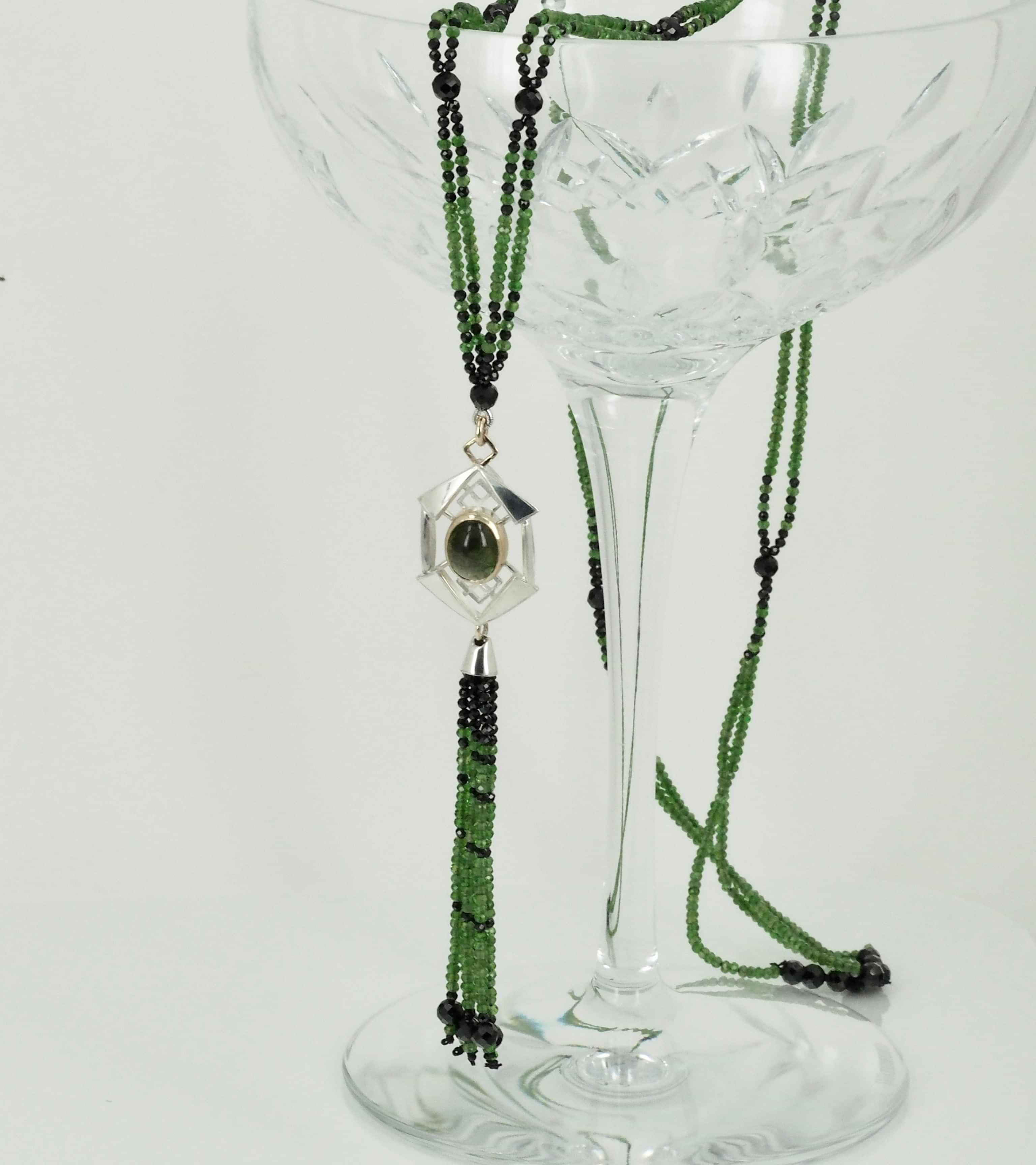
Long Necklace of Fine Beads
These delicate green beads are a stone less commonly heard of - chrome diopside. They are a lovely forrest green colour and I've interspersed them black spinels. The central stone in the setting is a cabochon cut green tourmaline.
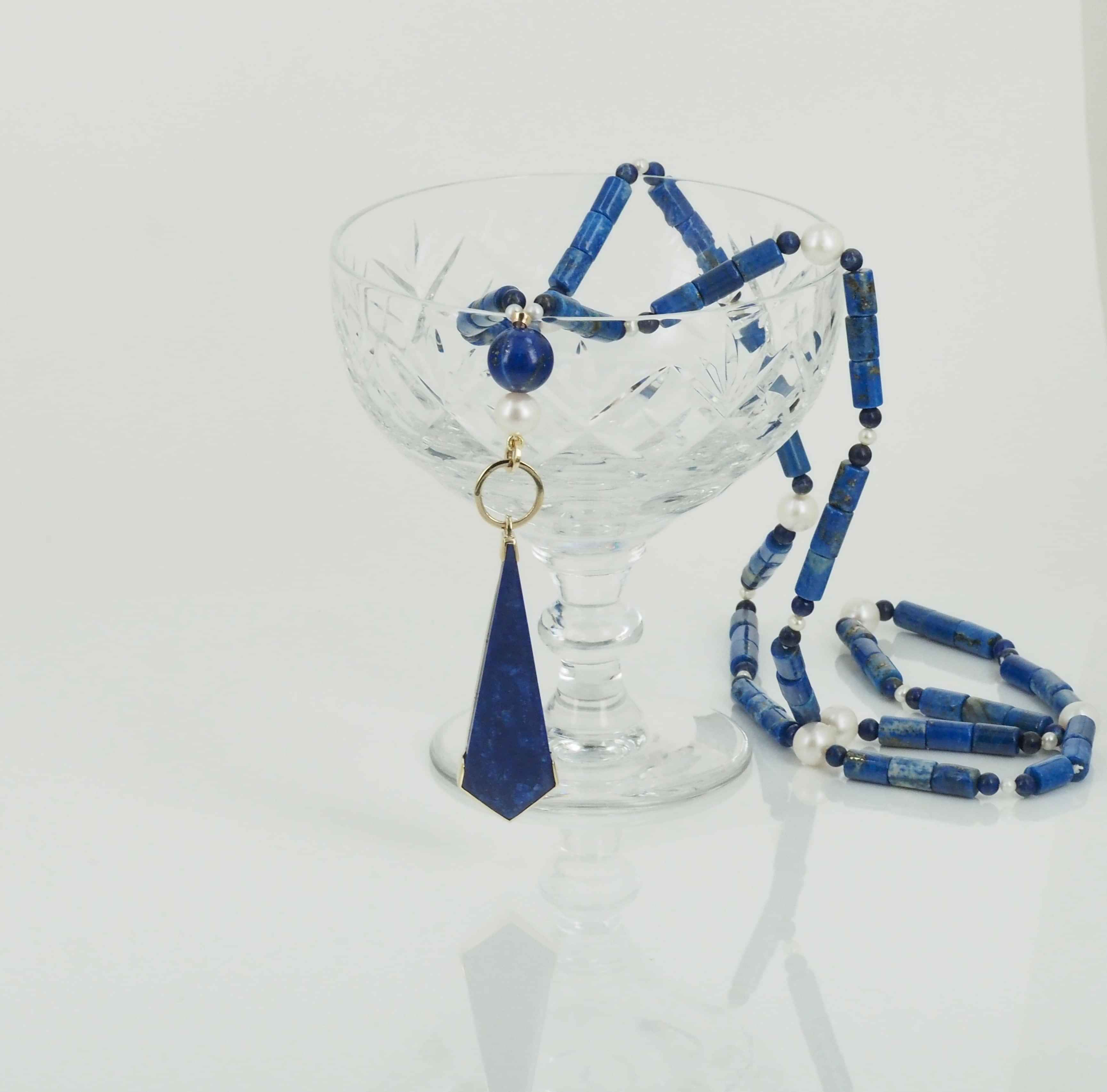
Beautiful Lapis Lazuli
The price of lapis lazuli is dependant on how intense and clean the blue in the stone is. You can see varying intensity of blue in the necklace pictured below - which I think adds to its interest.
Flapper Bracelets
Bracelets of the 1920's were quite often layers of beads or layers of bangles. The bangles were often made from the plastic of the time which was called bakelite. It was quite a hard substance and did not break down easily.
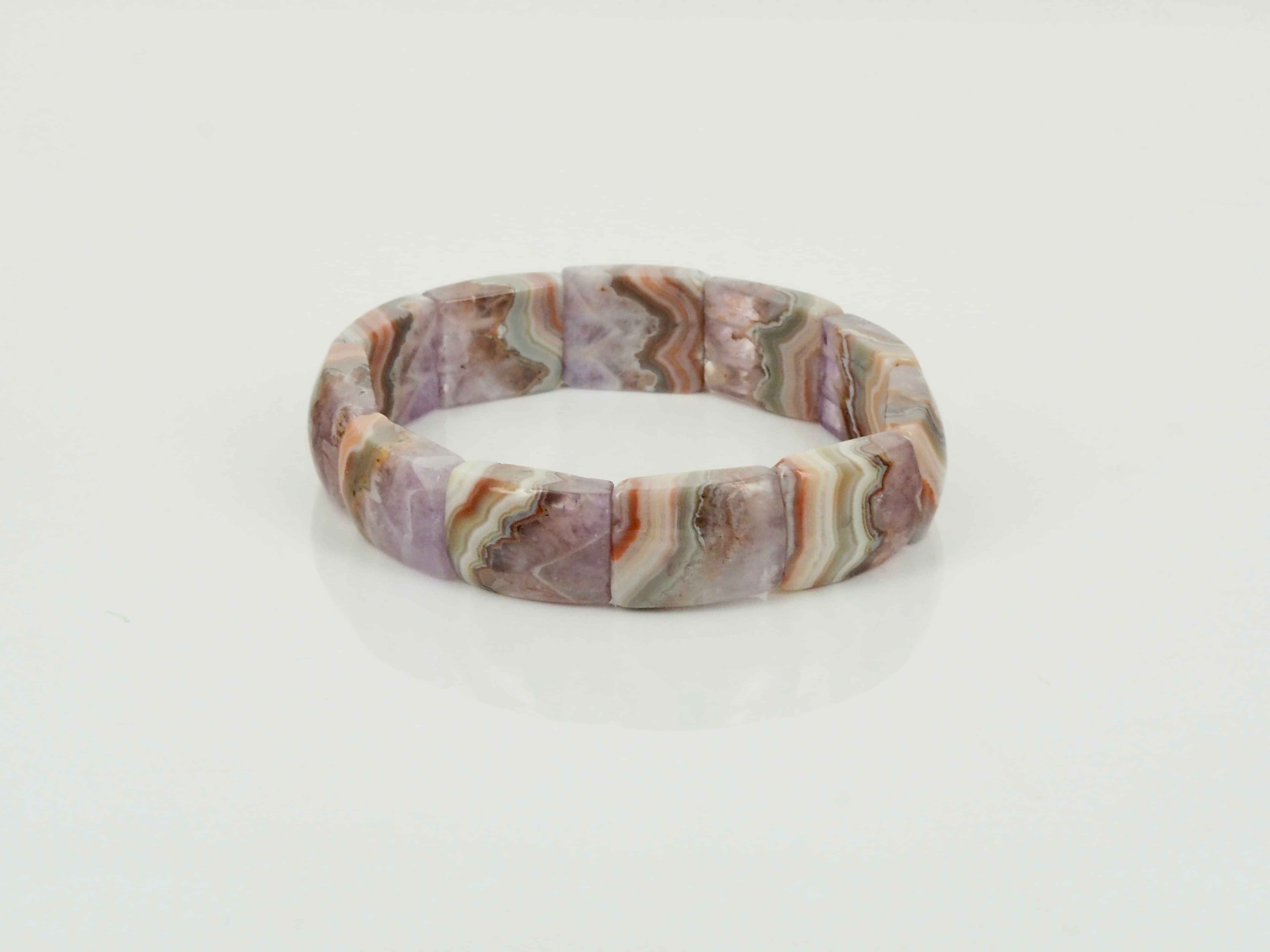
I don't have any handmade 1920's styled bangles to share, but the amethyst bead bracelet pictured below is similar to the look of a flapper bangle.
Rectangular Amethyst Beads
Bead Bracelets
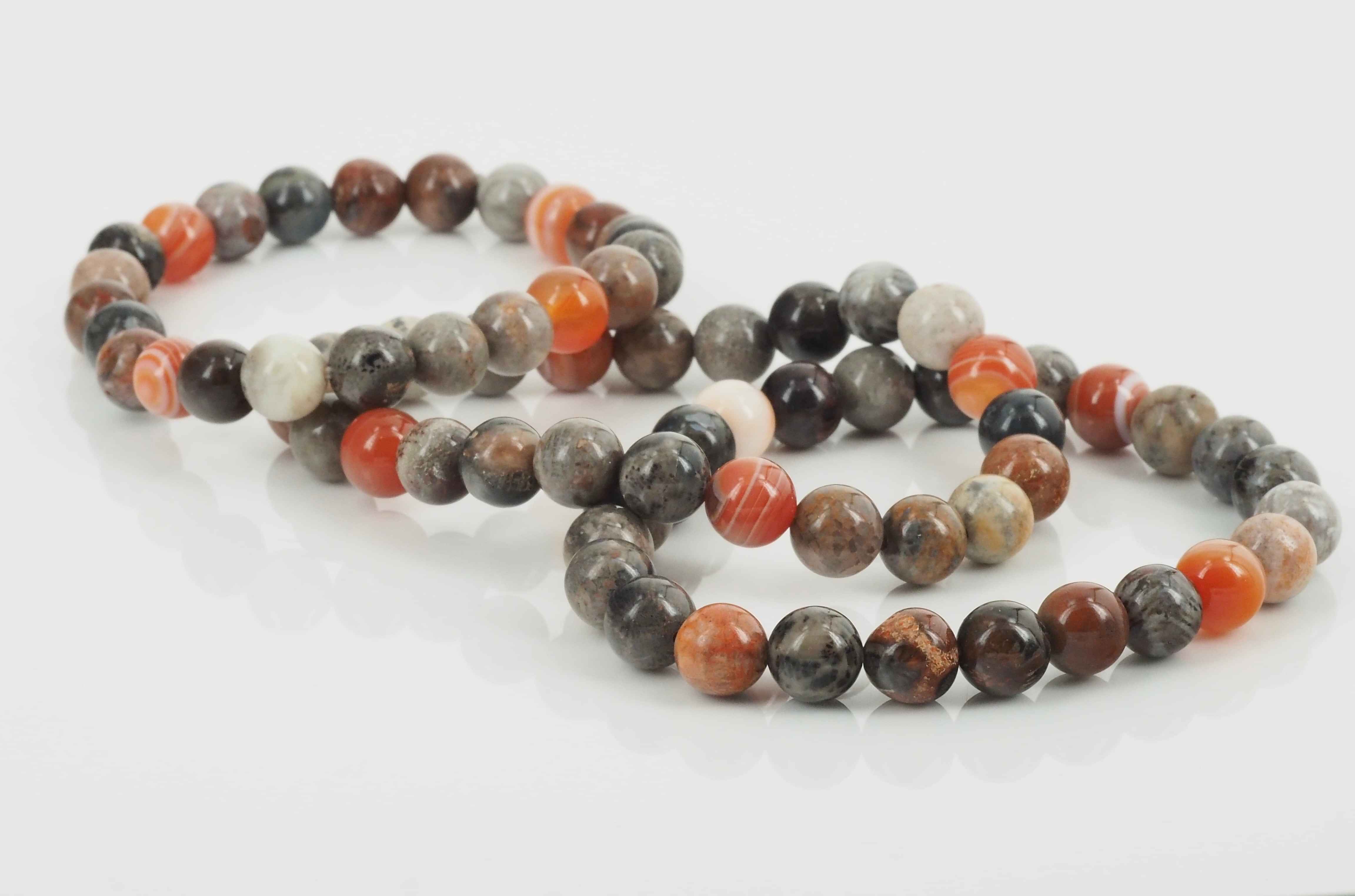
The beads in this picture are fossilised coral and orange agate.
Flapper Earrings
With short hair, a woman's neck was exposed so earrings were a necessary accessory.
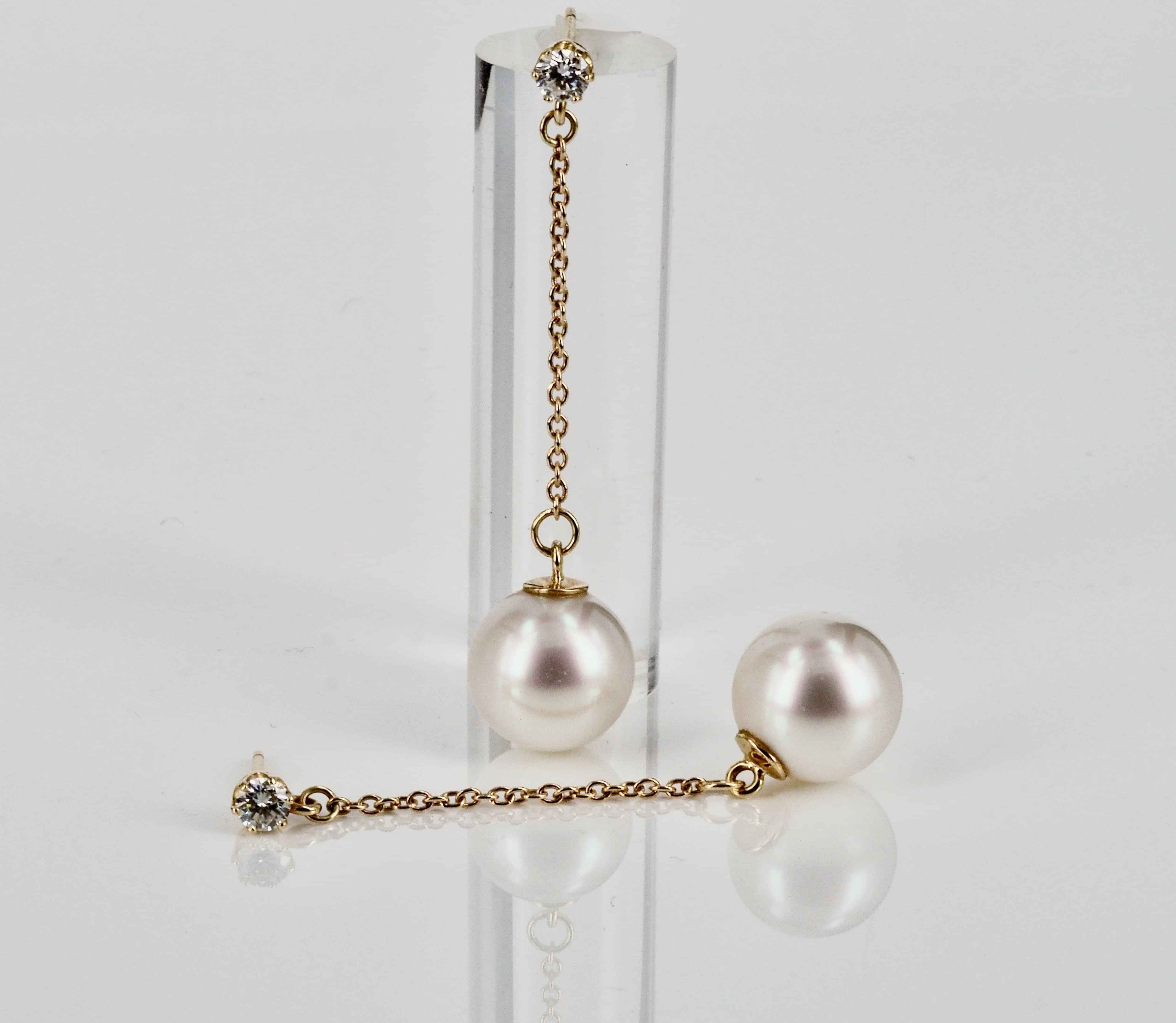
These absolutely stunning pearl earrings were made prior to this theme, but they are just perfect for it.
The pearls are exceptionally fine, high lustre, pink overtones, tight skin and no marks - Price on application.
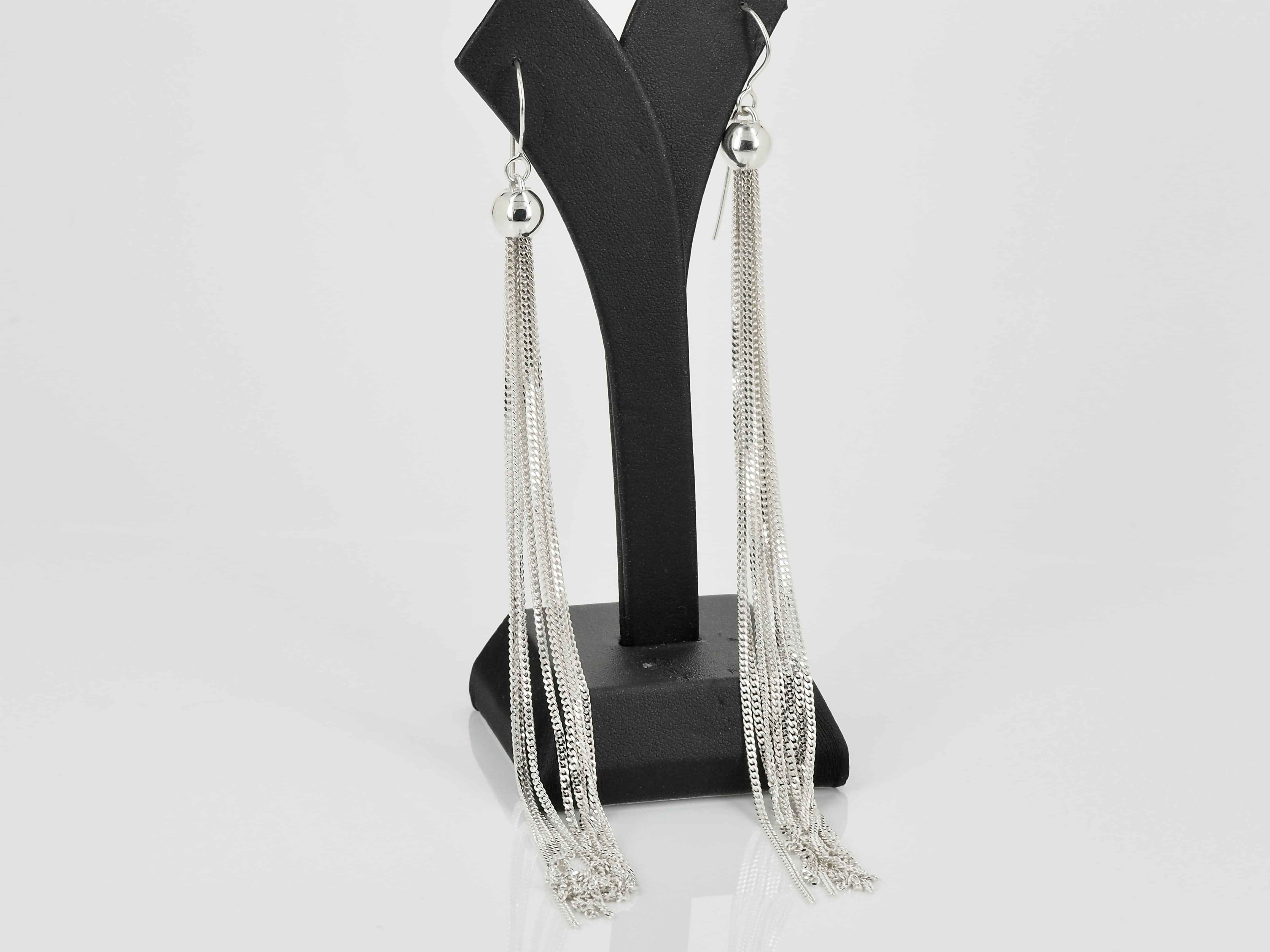
Lashings of long, fine sterling silver chain.
Art Deco Jewellery
The extraordinary influence of the Art Deco era is something that requires a whole article of its own. It began in the time of The Flappers, however I will only touch on it briefly.
In 1925 a huge exhibition was held in Paris. It was called Exposition internationale des arts décoratifs et industriels modernes and in English: International Exhibition of Modern Decorative and Industrial Arts. The exhibition ran from April to October and more than 16 million people visited it - quite a staggering amount of people. The works of art from the exhibition influenced a wave for new styles and designs, encompassing jewellery, architecture, kitchen wears and many more artefacts.
Jewellery focused on geometry and clean lines - no more romantic fluid and waving lines that were part of the Art Nouveau era. Although it is not always written as a description for Art Deco jewellery, I notice the use of negative space to enhance geometrical lines.
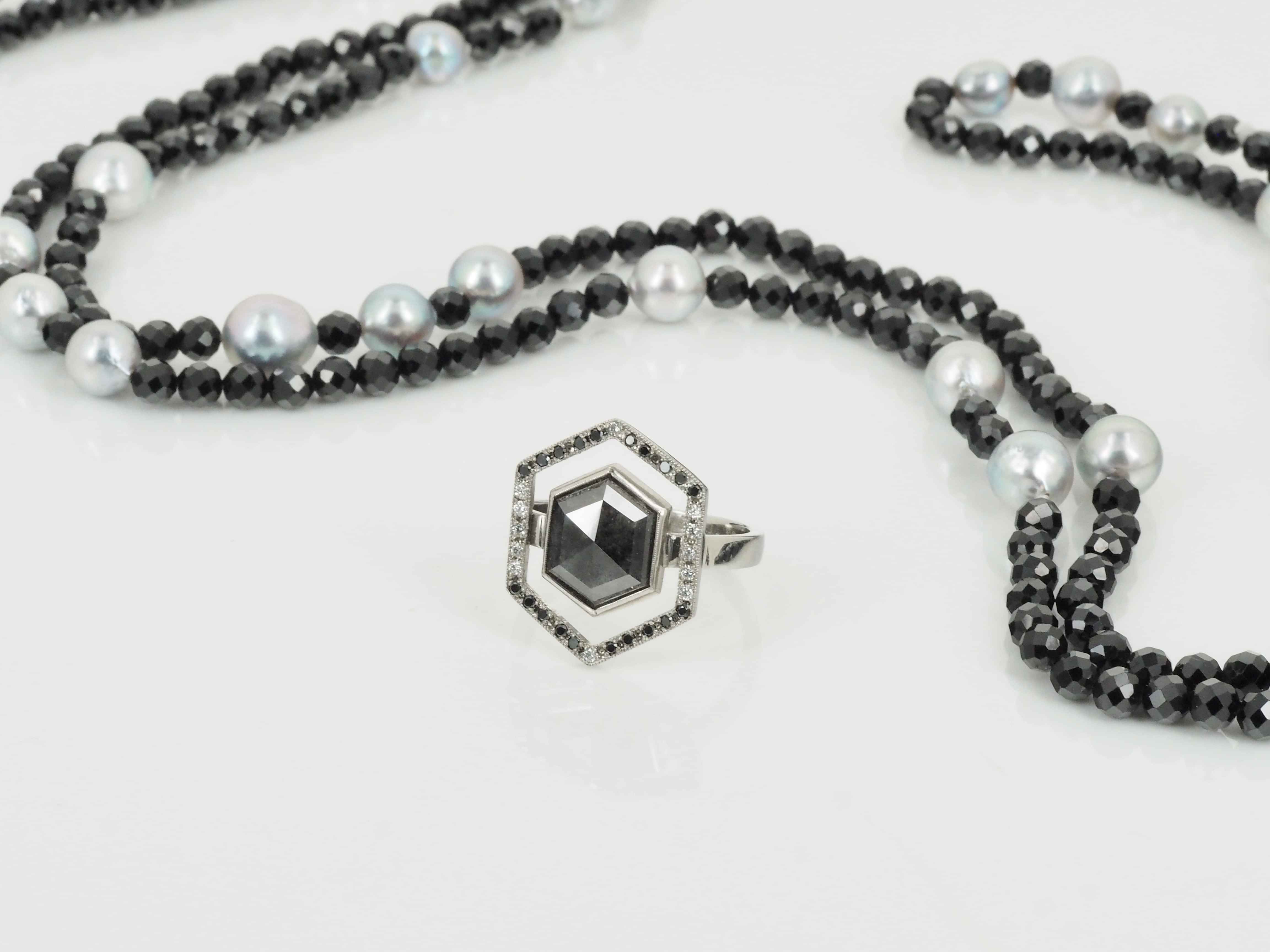
Art Deco Ring
I purchased the central natural coloured salt and pepper diamond in this ring a little while ago. I was intrigued by its colour and cut.
When I embarked on my '1920's Reimagined' range of jewellery, this stone was the perfect geometrical cut for an art deco styled ring. Sold
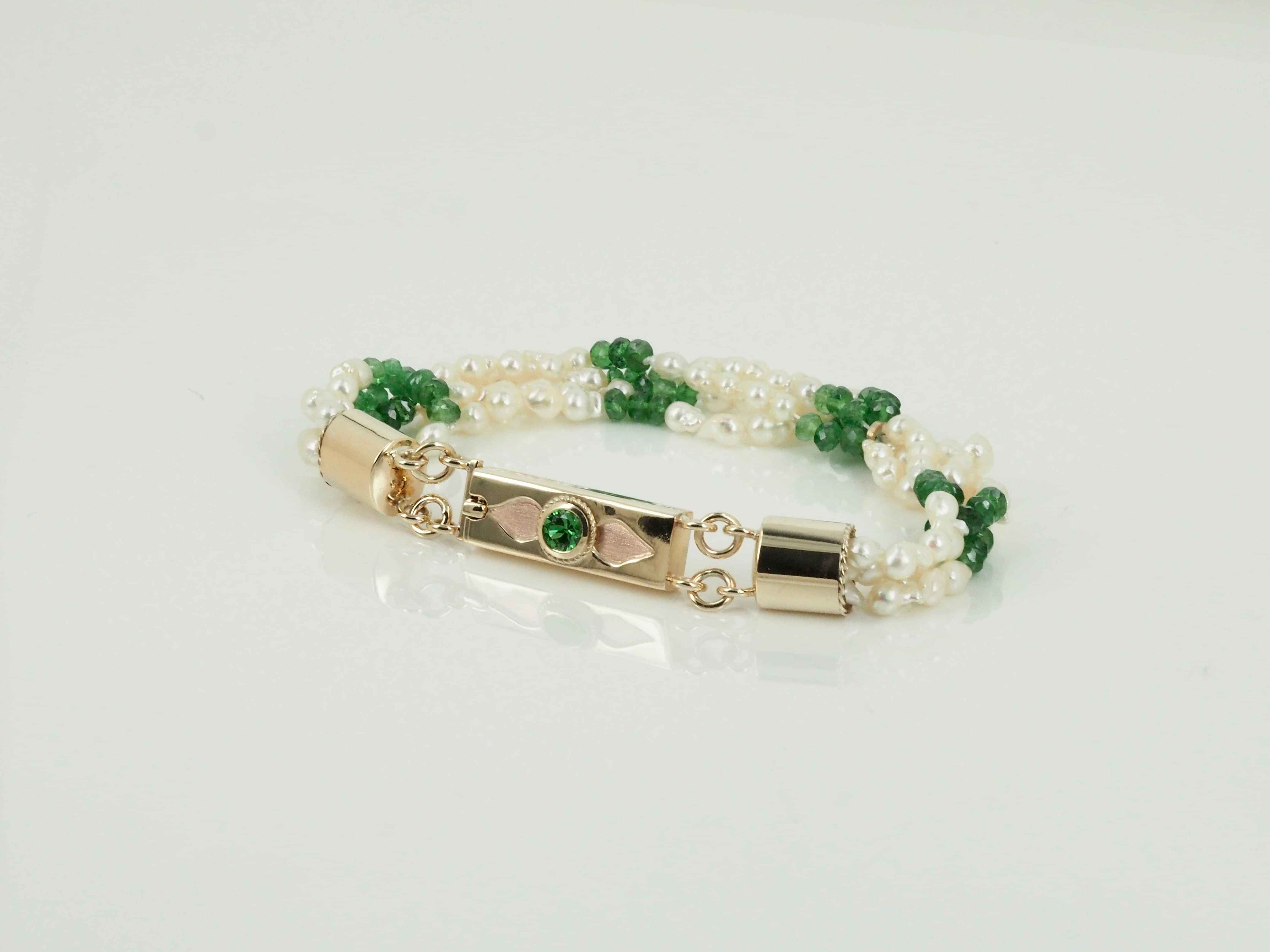
Art Deco Bracelet
Lustrous, baroque akoya pearls and tsavorite garnet beads with a 9ct yellow gold clasp.
More Jewellery
For now, this is the completion of my flapper and art deco jewellery collection. I hope you have enjoyed viewing it as much as I have enjoyed making it. I intend to add to this collection and if you are interested in hearing about new pieces first, please email me at: jewels@lynairekibblewhite.co.nz and I will keep you updated.